Buying a home comes with a long list of unfamiliar terms, but few matter as much as leasehold and freehold. They do not simply describe two types of property. They affect what you own, how long you own it, which costs you may have to pay, what changes you can make and how easy the property might be to mortgage or sell later.
At first glance, the difference sounds simple: a freeholder normally owns the building and land, while a leaseholder owns the right to occupy a property for a fixed term. In practice, the details can significantly affect your budget and experience as a homeowner.
This guide explains the difference between leasehold and freehold ownership in clear, practical terms, so you know what to look for before making an offer on a UK property.
What is a freehold property?
When you buy a freehold property, you normally own both the building and the land it sits on. Your ownership does not run down over time, and there is no superior freeholder from whom you are leasing the home.
Freehold is the most common form of ownership for houses in England and Wales. It often gives owners more freedom because there is no lease setting rules on pets, subletting or alterations. Planning permission, building regulations and restrictive covenants may still apply.
The main advantage is control: you choose how to maintain the property, appoint contractors and arrange buildings insurance. The trade-off is responsibility. If the roof or drainage needs major work, the cost is yours, so a realistic maintenance budget still matters.
Advantages of buying freehold
No lease expiry date to monitor.
No need to negotiate a lease extension.
Usually no ground rent.
Greater control over maintenance and improvements.
Often simpler to sell and mortgage than a comparable short-lease property.
What is a leasehold property?
When you buy a leasehold property, you are buying the remaining years of an existing lease. The lease is a legal agreement between the leaseholder and the freeholder, who may also be described as the landlord.
The lease states how long ownership lasts, who is responsible for repairs and which charges apply. It may also regulate alterations, subletting, pets, noise, flooring and communal areas.
Leasehold is especially common for flats and maisonettes because several homes share roofs, foundations, entrances, lifts, gardens and external walls. A freeholder or management company organises their upkeep and normally recovers the cost through service charges.
A long lease can originally be granted for anything from several decades to hundreds of years. What matters to a buyer is not the original term but the number of years remaining on the date of purchase.
The property returns to the freeholder when the lease expires, although many leaseholders can extend the lease or participate in buying the freehold. Both routes can involve valuation and legal costs.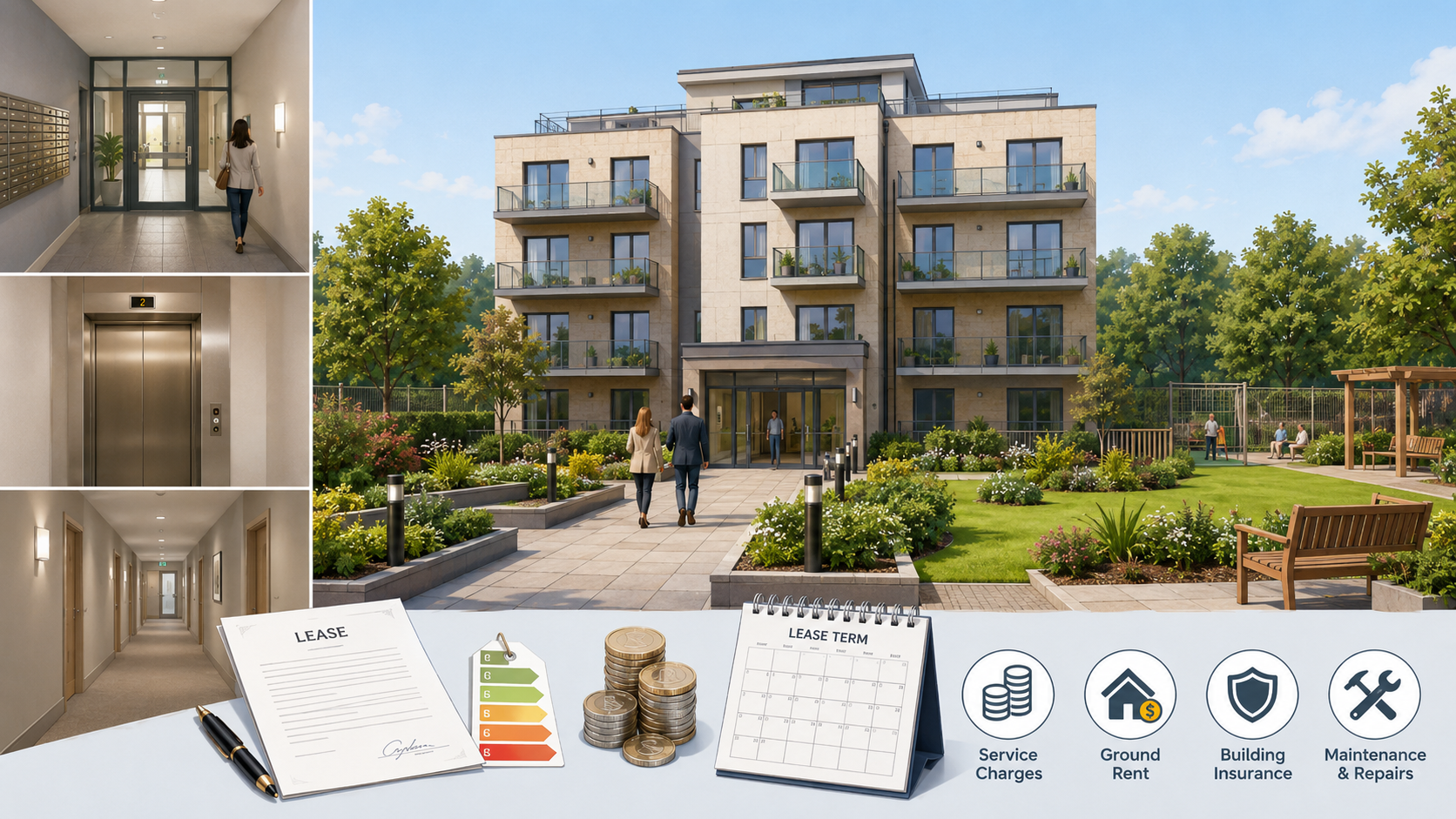
Freehold vs leasehold: the key differences
| Issue | Freehold property | Leasehold property |
|---|---|---|
| What you own | The property and usually the land beneath it. | The right to occupy the property for the remaining lease term. |
| Length of ownership | No fixed end date. | A fixed number of years stated in the lease. |
| Land or building owner | You are normally the outright owner. | A separate freeholder owns the land or overall building. |
| Maintenance | You arrange and pay for it directly. | You maintain the interior and usually contribute to shared maintenance. |
| Regular charges | Usually no ground rent, although estate charges can apply. | Service charges, ground rent and other fees may apply. |
| Alterations | More control, subject to planning rules and covenants. | The lease may require written permission for major changes. |
| Selling and mortgages | Often more straightforward. | The lease length and terms can affect value and lender approval. |
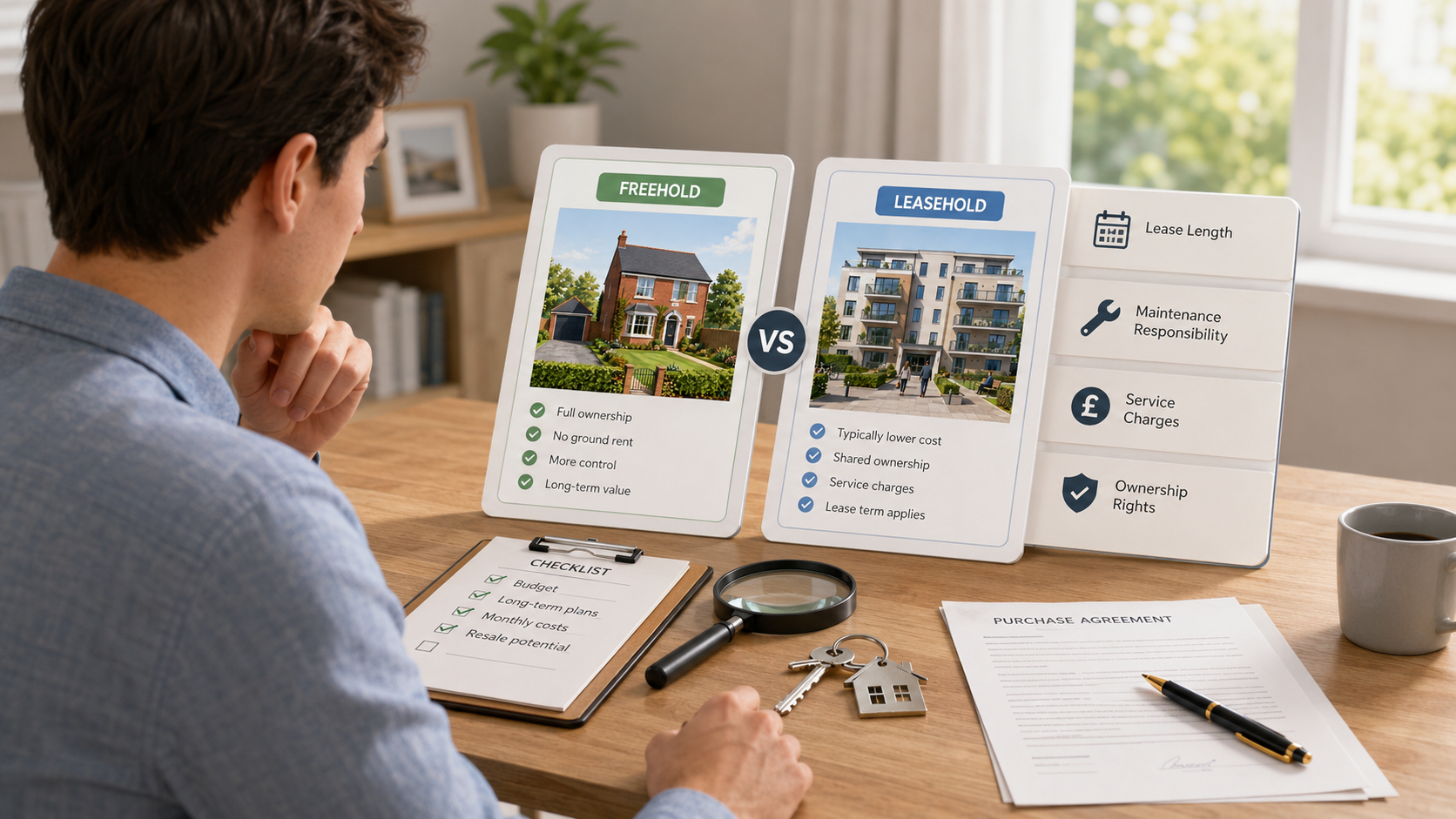
What charges can come with a leasehold property?
The purchase price is only one part of the cost of buying a leasehold home. Before making an offer, ask for a clear record of current charges, recent accounts and any planned major works.
Service charges
Service charges pay for the management, repair and maintenance of shared parts of the building or estate. Depending on the development, this could include cleaning, gardening, lift maintenance, concierge services, communal electricity, fire-safety systems, building insurance and repairs to the roof or exterior.
Service charges can change each year. Buildings with gyms, concierge services or several lifts normally cost more to run. Look at what is included, how well the building is maintained and whether charges have increased sharply.
Ground rent
Ground rent is a payment made under the lease to the freeholder. It is different from a service charge because the freeholder does not necessarily provide a service in return.
Most qualifying new residential leases granted from 30 June 2022 are restricted to a peppercorn ground rent, which effectively means zero. However, buying an older lease after that date does not automatically remove an existing ground rent clause. Your solicitor should check the amount, the review formula and whether the clause could concern a mortgage lender.
Reserve or sinking funds
Some buildings collect money into a reserve fund or sinking fund for future major expenditure, such as replacing a roof, redecorating communal areas or renewing a lift. A healthy reserve fund can reduce the risk of a large one-off bill, although contributions are not normally returned when an owner sells.
Major works and one-off bills
Large projects may lead to extra charges on top of the normal annual service charge. Ask whether any Section 20 consultation, major repair programme or building-safety work is planned. A flat that looks affordable can become expensive if a substantial bill arrives shortly after completion.
Administration and permission fees
The lease may allow charges for providing management packs, registering a sale, giving consent to alterations, subletting or keeping a pet. These costs vary, so read the lease rather than assuming every building works in the same way.
Why does the length of a lease matter?
The remaining lease term is one of the most important facts to check when buying a leasehold property. As the lease becomes shorter, the property can become less attractive to buyers and mortgage lenders. It may also become more expensive to extend.
You will often hear buyers mention the “80-year rule”. Treat it as a warning point rather than a universal mortgage cut-off. Lenders use different criteria, and some require the lease to continue for a set period beyond the mortgage term.
A flat with 150 years remaining is unlikely to raise the same concerns as an identical flat with 72 years. A lower price may look attractive, but the likely lease-extension cost must be considered.
Can you extend a lease?
Many qualifying leaseholders have a legal route to extend their lease, and an informal extension may also be negotiated with the freeholder. The price can depend on the property value, ground rent, remaining term and the legal framework in force at the time.
Since January 2025, qualifying buyers in England and Wales no longer have to wait two years after purchasing before starting a statutory lease-extension or freehold-purchase claim. That is useful, but extending a lease is still a specialist process. A valuation surveyor and solicitor with leasehold experience can help you compare the statutory and informal options.
Be cautious if a seller describes a lease extension as “easy” or “cheap” without evidence. Ask for a valuation or previous correspondence, and have your conveyancer review the proposed terms.
What does share of freehold mean?
A share of freehold usually means that flat owners hold their individual leases while also owning a share in the freehold of the building, either personally or through a company.
This can give owners more influence over maintenance, insurance, service charges and lease extensions. The flat usually remains leasehold, so its lease must still be reviewed.
Share of freehold works best when owners communicate and budget sensibly. Ask how decisions are made, who manages the accounts and whether the building has a long-term maintenance plan.
What is commonhold?
Commonhold is an alternative structure designed mainly for flats and other properties with shared areas. Each owner holds the freehold of their individual unit, while a commonhold association manages the shared parts.
Unlike leasehold, commonhold ownership does not reduce in length over time. It remains relatively uncommon in the UK, although the government has proposed reforms intended to make commonhold easier to use and to move most new flats away from traditional leasehold ownership.
As of July 2026, some of these wider commonhold and ground-rent changes remain proposed or subject to implementation. Buyers should check the current legal position rather than relying on headlines or assuming that draft reforms have already changed their lease.
Is freehold always better than leasehold?
Freehold is often simpler, especially for houses, but tenure alone does not tell you whether a property is a good purchase.
A well-managed leasehold flat with a long lease, transparent accounts and reasonable service charges may be a far better home than a poorly maintained freehold house requiring major structural repairs. Equally, a stylish leasehold apartment can be a risky purchase if the lease is short, the ground rent escalates sharply or major works are expected.
The better choice depends on your budget, the type of home you want and how much responsibility you are comfortable taking on.
Checklist before buying a leasehold property
Your solicitor or conveyancer should investigate the legal details, but buyers should also understand the practical questions. Before exchanging contracts, ask:
How many years remain on the lease?
What is the current service charge, and how has it changed over recent years?
Is ground rent payable, and how is it reviewed?
Are there planned major works or unresolved building-safety issues?
How much money is held in the reserve fund?
Who manages the building, and are residents satisfied with the management?
Does the lease restrict subletting, pets, flooring or alterations?
Are there arrears, disputes or tribunal proceedings affecting the building?
Will your chosen mortgage lender accept the lease terms?
What fees will be charged when you sell, remortgage or request consent?
Frequently asked questions
Are all flats leasehold?
No. Most flats in England and Wales are leasehold, but some are sold with a share of freehold and a smaller number use commonhold. Even when a flat comes with a share of freehold, it will usually still have a lease governing the individual unit.
Are all houses freehold?
No. Most houses are freehold, but leasehold houses exist, particularly in some newer developments and shared-ownership schemes. Always check the property title and marketing details.
Do freehold owners ever pay service charges?
Yes. A freehold property on a private estate may have an estate charge for maintaining shared roads, landscaping, gates or communal facilities. Ask how the charge is calculated and what rights homeowners have to challenge or manage it.
Can a leasehold property be difficult to mortgage?
It can be if the remaining lease is too short or the lease contains terms the lender considers unacceptable. Ground-rent review clauses, unusual restrictions, building-safety concerns and poor management information can all create delays.
How do I find out whether a property is leasehold or freehold?
The estate agent’s listing should state the tenure, but your conveyancer will confirm it through the title documents. You can also obtain title information from HM Land Registry for properties in England and Wales.
Final thoughts
The difference between leasehold and freehold is not just a technical detail. It shapes your rights, responsibilities and long-term costs as an owner.
With a freehold property, you usually gain greater control and permanent ownership of the building and land, but you also carry full responsibility for maintenance. With a leasehold property, shared management can be convenient, especially in an apartment building, but you need to understand the lease length, service charges, ground rent and restrictions before committing.
The safest approach is to look beyond the headline price. Read the lease, study the management accounts, ask about future works and use a conveyancer who understands leasehold property. A few careful questions before exchange can prevent expensive surprises later.