Purchasing a property is arguably one of the most significant and expensive milestones in anyone's life. In the United Kingdom, the housing market moves quickly, and the pressure to secure a dream home can often cause buyers to rush through the essential final steps of the transaction. However, beneath the fresh coat of paint or the cleverly arranged furniture, a house can hide a multitude of expensive secrets. This is precisely where a professional house survey comes into play.
A house survey is a detailed inspection of a property’s condition, conducted by a qualified and accredited professional surveyor. It provides an expert account of the property's structural integrity, highlighting any existing problems, potential risks, and necessary repairs in a clear, easy-to-understand format. While the excitement of having an offer accepted can make the prospect of paying for an independent survey seem like an unnecessary extra expense, it is, in reality, a critical investment. The objective of this comprehensive guide is to explore the absolute necessity of getting a home survey when buying a property in the UK, detailing the specific types of surveys available, what they cost, what they examine, and the profound benefits they offer to prospective buyers.
In England, Wales, and Northern Ireland, there is no legal obligation for a buyer to commission a house survey before purchasing a property. Because of this, some buyers are tempted to skip the process entirely to save a few hundred pounds upfront. This decision is often the root of severe financial distress down the line. To understand why a survey is strictly necessary, one must look at the legal principles of UK property purchasing and the common misconceptions held by first-time buyers.
The UK property market operates heavily on the legal principle of 'caveat emptor', which translates to 'let the buyer beware'. In practical terms, this means that the seller is not legally obligated to disclose physical defects in the property unless you specifically ask them the right questions, and even then, their knowledge may be limited. If you buy a house and later discover that the roof is leaking, the timbers are infested with woodworm, or the foundations are subsiding, the financial burden falls entirely on you as the new owner. You have no legal recourse against the previous owner for failing to point out these flaws. A professional survey acts as your primary shield against the risks of caveat emptor.
One of the most dangerous and common misconceptions among property buyers is confusing a mortgage valuation with a structural survey. When you apply for a mortgage, your lender will insist on a valuation. They will send a valuer to the property—or sometimes just conduct a 'desktop valuation' using online data—to confirm that the property is worth the amount you are asking to borrow.
It is crucial to understand that a mortgage valuation is strictly for the benefit of the lender, not the buyer. It is a brief inspection designed solely to ensure the lender’s investment is secure. It will not delve into the structural condition of the building, nor will it identify issues like rising damp, electrical faults, or imminent roof failures, unless they are glaringly obvious and directly impact the immediate value of the home. Relying on a mortgage valuation as a substitute for a home survey is a profound risk.
A property may look impeccable during a 20-minute viewing, but structural defects are rarely obvious to the untrained eye. Issues such as Japanese knotweed in the garden, poor damp proofing, or asbestos in the ceilings can cost tens of thousands of pounds to rectify. A survey identifies these hidden traps, allowing you to budget accordingly or reconsider the purchase altogether.
The property landscape in the UK is incredibly diverse, ranging from brand-new developments to Victorian terraces and centuries-old thatched cottages. Consequently, a 'one-size-fits-all' approach to surveying does not work. To ensure consistency and transparency, professional surveying bodies in the UK generally categorize home surveys into three main levels. Choosing the right level depends on the property's age, size, condition, and complexity.
The Level 1 survey, historically known as a Condition Report, is the most basic and least expensive tier of home survey. It is designed to provide a high-level overview of the property's condition.
What it covers: The surveyor will conduct a standard visual inspection of the property, identifying any glaring risks, urgent defects, and potential legal issues (such as boundary disputes). It typically utilizes a simple 'traffic light' rating system to denote the condition of various parts of the property (Green for good, Amber for issues requiring attention, Red for severe defects).
What it lacks: A Level 1 survey is superficial. The surveyor will not lift carpets, look behind furniture, or extensively check the roof space or drainage chambers. Crucially, while it points out defects, it does not provide detailed advice on how to fix them or how much repairs might cost.
Who it is for: This survey is only recommended if you are buying a conventional, relatively new property (built within the last 10 to 15 years) that appears to be in excellent condition and is built from standard building materials.
The Level 2 survey, often referred to as a Homebuyer Report, is the most popular choice for buyers in the UK. It strikes a balance between comprehensive detail and affordability.
What it covers: A Level 2 survey involves a much more thorough visual inspection than Level 1. The surveyor will inspect the roof space (if safely accessible), examine drainage chambers, and actively look for common UK property issues such as dampness, subsidence, and timber decay. Beyond just identifying problems, a Level 2 report provides actionable advice. It outlines the impact of the defects, suggests ongoing maintenance requirements, and helps the buyer understand what repairs will be necessary in the near future.
Additionally, buyers can often choose a 'Level 2 plus Valuation' package. This includes the survey, an independent market valuation of the property, and an insurance reinstatement figure (the cost to rebuild the house from scratch if it were destroyed), which is vital for home insurance.
Who it is for: This level is ideally suited for standard, conventional properties (such as typical 20th-century semi-detached houses or purpose-built flats) that are in a reasonable condition and have not undergone significant, complex alterations.
The Level 3 survey, previously known as a Full Structural Survey, is the most comprehensive, detailed, and invasive inspection available.
What it covers: A Level 3 report provides an exhaustive analysis of the property's fabric and condition. The surveyor will conduct a prolonged, in-depth inspection, checking the attic, looking under floorboards (where accessible without causing damage), and analyzing the structural integrity of the walls and foundations. The resulting report establishes exactly how the property is built, the materials used, and how these materials will perform over time.
Furthermore, a Level 3 survey explicitly describes visible defects and potential hidden flaws. It gives a detailed timeline for repairs, explains the severe consequences of not carrying out these repairs, and often provides an indication of repair costs.
Who it is for: A Level 3 survey is strongly recommended for older properties (e.g., Victorian, Edwardian, or period homes over 50 years old), run-down buildings requiring renovation, non-standard constructions (e.g., timber-framed or thatched roofs), heavily altered or extended properties, or if the buyer is planning major structural renovations themselves.
It is important to note that the property buying process differs in Scotland. In Scotland, the legal burden falls on the seller. Any house put up for sale must have a 'Home Report' arranged by the seller before the property is marketed. This document must be made available to all prospective buyers. A Scottish Home Report typically includes a Level 2 survey and valuation, an Energy Performance Certificate (EPC), and a property questionnaire covering council tax banding, parking, and utility suppliers.
Understanding what a surveyor actually looks for demystifies the process and highlights the true value of the service. While the depth varies by the level of survey chosen, a surveyor generally evaluates the following critical areas:
• Structural Integrity and Subsidence: The surveyor will look for cracks in the walls, uneven floors, or warped door frames, which are telltale signs of subsidence (the ground sinking beneath the foundations) or heave (the ground swelling). In the UK, where many homes are built on clay soil, subsidence is a major and costly concern.
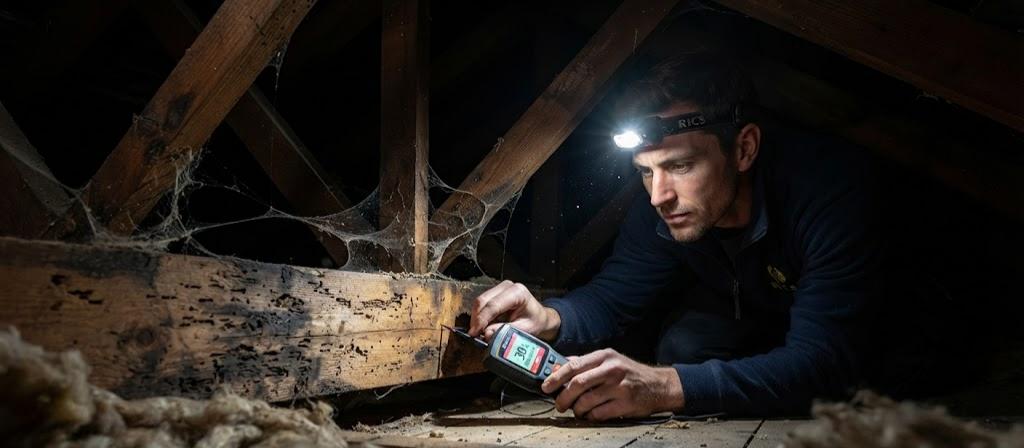
• Damp, Rot, and Woodworm: Using specialized tools like damp meters, the surveyor will check for rising damp (moisture travelling up from the ground), penetrating damp (water leaking through walls or roofs), and condensation issues. They will also inspect accessible timber for signs of wet rot, dry rot, and wood-boring insects (woodworm), all of which can devastate a building's structure.
• Roof Condition: Roof repairs are notoriously expensive. The surveyor will use binoculars to inspect roof tiles, chimney stacks, flashing, and gutters. If safely accessible, they will enter the loft to check the roof timbers and felt from the inside.
• Insulation and Ventilation: Proper insulation is crucial for energy efficiency in the UK's cold climate. The survey will check the loft insulation and assess the general ventilation of the property to prevent future damp issues.
• Services and Utilities: While surveyors are not usually qualified electricians or gas safety engineers, they will perform a visual inspection of the gas, electricity, water, and drainage systems. They will look for outdated fuse boxes, old wiring, lead pipes, or signs of poor drainage, and recommend whether you need a specialist (like a certified electrician) to investigate further.
• Legal and Environmental Issues: The surveyor will cross-reference the physical boundaries of the property with the plans, identifying potential boundary disputes. They will also note if there are large trees too close to the property (which can damage foundations) or if the property is in a high-risk flood zone.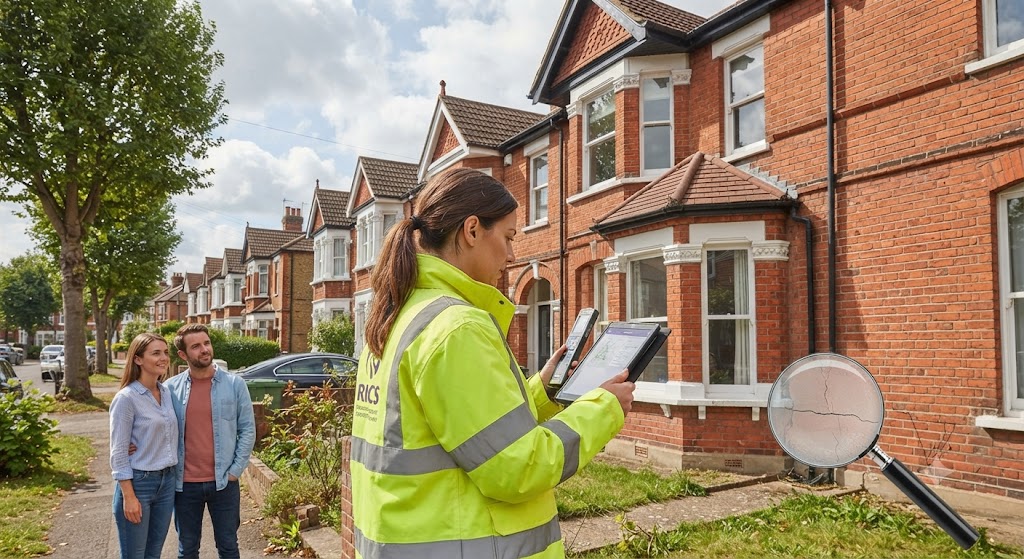
The cost of a house survey in the UK is highly variable. Surveyors operate independently, meaning there are no fixed national prices. The final quote you receive will depend on several factors, primarily:
• The value of the property.
• The size and complexity of the property (a 5-bedroom detached house takes much longer to inspect than a 1-bedroom flat).
• The age and type of the property.
• The location (surveys in London and the South East are generally more expensive).
• The level of survey chosen.
However, as a general rule of thumb, buyers can expect the following estimated price brackets:
• Level 1 Condition Report: Typically ranges from £300 to £400. It is the most budget-friendly option for newer homes.
• Level 2 Homebuyer Report: Generally costs between £400 and £600. If you add the valuation, expect to pay towards the higher end of that scale or slightly more.
• Level 3 Building Survey: Given the intensive nature of the work, these start around £700 but can easily exceed £1,500 to £2,000 for very large, historic, or highly complex properties.
While spending £600 to £1,000 on a piece of paper can feel painful amidst the already high costs of moving (stamp duty, solicitor fees, removals), a thorough, accurate, and impartial survey undertaken by a regulated professional is a quality service that pays for itself. It is a minor upfront fee compared to the potential £10,000+ cost of a new roof or structural underpinning.
Beyond simple peace of mind, a professional survey equips the buyer with significant strategic advantages during the property transaction.
This is perhaps the most tangible benefit of a survey. If the report uncovers significant issues—for example, that the property requires £5,000 worth of damp proofing—you can use the official report to renegotiate the asking price. You can present the findings to the seller and ask for the £5,000 to be deducted from the agreed sale price, ensuring you have the funds to fix the issue once you move in. Most reasonable sellers will agree to this, knowing that if they pull out, the next buyer's survey will uncover the exact same problem.
Alternatively, instead of dropping the price, you can make the purchase conditional on the seller fixing the identified problems before the exchange of contracts. For instance, if the survey notes a dangerously outdated electrical board, you can insist the seller hires an electrician to resolve it at their expense before you commit to the purchase.
Even if the survey doesn't uncover any catastrophic 'deal-breakers', a Level 2 or 3 report serves as an incredible manual for your new home. It will tell you exactly what maintenance tasks need to be prioritized in the first year, three years, and five years of your ownership, allowing you to budget intelligently and prevent minor issues from becoming major disasters.
Finally, the ultimate benefit of a house survey is saving you from making a monumental mistake. Sometimes, a Level 3 survey will reveal that a charming period cottage is, in reality, a structural money pit riddled with subsidence and dry rot. In these scenarios, the survey provides the objective data needed to emotionally detach from the property and walk away, saving you from a lifetime of stress and financial ruin.
Purchasing a property in the UK is a complex process fraught with hidden risks. Relying solely on a mortgage valuation and the seller's word is a gamble that few can afford to take. By understanding the principle of caveat emptor, buyers must recognize that the responsibility of discovering a property's true condition lies squarely on their shoulders.
Whether it is a basic Level 1 Condition Report for a modern apartment, a standard Level 2 survey for a mid-century semi, or an exhaustive Level 3 Building Survey for a historic home, commissioning an independent, accredited surveyor is non-negotiable. The upfront cost of a survey pales in comparison to the immense financial and emotional protection it provides. It grants you the power to negotiate, the foresight to budget, and ultimately, the profound peace of mind that the home you are buying is a safe, sound, and secure investment for your future.