In the realm of real estate, property investment, and personal finance, Loan-to-Value (LTV) is one of the most critical metrics used by lenders, borrowers, and financial institutions. Fundamentally, LTV is a financial ratio that compares the size of a loan you are taking out against the total appraised value of the asset—usually a property—that is securing the loan. Expressed as a percentage, the LTV represents the proportion of the property's value that is covered by the mortgage. The remaining percentage represents the buyer's equity, which is typically formed by the initial cash deposit.
The formula for calculating LTV is straightforward:
LTV = (Mortgage Amount / Property Value) × 100
For example, if you are purchasing a house in the UK valued at £300,000 and you have saved a deposit of £60,000, you will need a mortgage of £240,000 to complete the purchase.
Calculation: (£240,000 / £300,000) × 100 = 80% LTV.
In this scenario, your LTV is 80%, and your equity is 20%. Understanding this ratio is the cornerstone of navigating the property market, as it dictates everything from your mortgage eligibility to the interest rates you will be offered.
While the mathematical calculation of LTV is universal, the application and implications of LTV within the UK property market possess distinct characteristics shaped by the country's banking regulations, market dynamics, and housing policies.
Following the 2008 financial crisis, the UK's Financial Conduct Authority (FCA) and the Prudential Regulation Authority (PRA) implemented strict lending rules. Lenders must conduct rigorous affordability stress tests. In the UK, high LTV lending (e.g., 90% or 95% LTV) is heavily regulated to ensure borrowers can withstand significant interest rate hikes. This means that while a 95% LTV mortgage might be available, the barrier to securing it is strictly governed by income multipliers and stress testing.
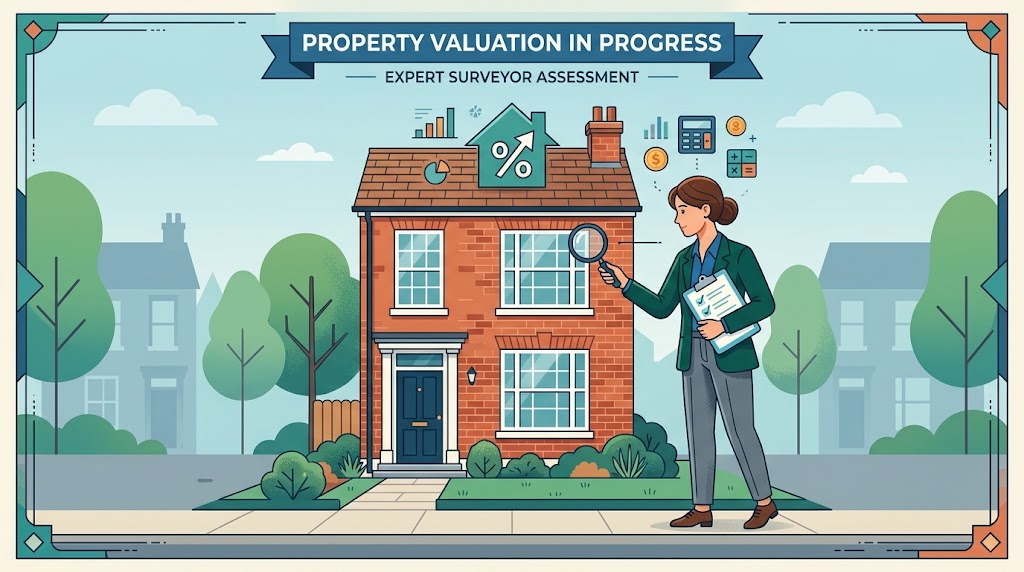
In the UK, the 'Value' in Loan-to-Value is strictly determined by a professional valuation, typically conducted by a surveyor accredited by the Royal Institution of Chartered Surveyors (RICS) on behalf of the lender. A common phenomenon in the UK market is the 'down-valuation', where a surveyor values the property lower than the agreed purchase price. If a buyer agrees to buy a house for £300,000 with a £30,000 deposit (expected 90% LTV), but the surveyor values the property at £280,000, the lender will base the mortgage on £280,000. This suddenly shifts the required LTV and forces the buyer to either find a larger cash deposit or renegotiate the purchase price.
The UK has a massive private rental sector driven by Buy-to-Let investors. The LTV requirements for BTL mortgages differ vastly from standard residential mortgages. While residential buyers can secure up to 95% LTV, BTL mortgages in the UK generally cap out at 75% LTV, with lenders requiring a minimum 25% deposit. Furthermore, UK lenders assess BTL LTV alongside the Interest Coverage Ratio (ICR), ensuring the rental income significantly exceeds the mortgage interest payments.
LTV is not just a metric for purchasing a property; it is an active, fluctuating figure used across a property's entire financial lifecycle.
For first-time buyers in the UK, the primary hurdle is accumulating a sufficient deposit. Consequently, first-time buyers usually operate in the high LTV space (85% to 95% LTV). The LTV dictates their entry point into the market. Due to the high LTV, lenders perceive these borrowers as higher risk, meaning they will access fewer mortgage products and face higher interest rates. UK government interventions, such as the Mortgage Guarantee Scheme, have historically been deployed specifically to encourage lenders to offer 95% LTV mortgages to assist first-time buyers.
When a UK homeowner's initial mortgage fixed term (typically 2, 3, or 5 years) expires, they usually remortgage to avoid falling onto their lender’s costly Standard Variable Rate (SVR). At this stage, the LTV is recalculated. The new LTV is based on the outstanding mortgage balance against the current market value of the property. If the property's value has increased and the mortgage balance has decreased through repayments, the LTV will be lower. Homeowners can also choose to increase their LTV intentionally during remortgaging to release cash (equity release) for home improvements, debt consolidation, or a deposit on a second property.
UK landlords use LTV strategically to expand their portfolios. If a landlord holds a property that has appreciated significantly, their LTV drops. They may remortgage to pull the LTV back up to 75%, releasing the equity in cash to use as a 25% deposit for purchasing an additional Buy-to-Let property.
The relationship between LTV and mortgage interest rates is fundamentally driven by risk. For banks and building societies in the UK, a mortgage is secured against the property. If a borrower defaults and the lender must repossess and sell the house, a lower LTV provides a larger 'cushion' against fluctuating property prices. If house prices fall, a lender wants to ensure the sale price will still cover the outstanding loan.
Because higher LTVs carry greater risk of negative equity (where the loan exceeds the property value), lenders charge higher interest rates to compensate for that risk. Conversely, borrowers with a low LTV are rewarded with the most competitive interest rates on the market.
UK lenders price their mortgage products in specific LTV bands, typically moving in 5% increments. Crossing a threshold can grant access to significantly cheaper interest rates. The standard bands are:
• 95% LTV (5% Deposit): The highest risk tier. Limited product availability, strict lending criteria, and the highest interest rates. Often utilized by first-time buyers without financial assistance from family.
• 90% LTV (10% Deposit): A standard entry-level tier. Interest rates are noticeably better than at 95%, and product availability increases vastly.
• 80% - 85% LTV (15% - 20% Deposit): The middle ground where rates become moderately competitive. Suitable for second-steppers or buyers with healthy savings.
• 75% LTV (25% Deposit): A major milestone. For residential mortgages, hitting 75% LTV unlocks access to highly competitive rates. This is also the maximum LTV standard for the Buy-to-Let sector.
• 60% LTV (40% Deposit): The 'Sweet Spot'. In the UK mortgage market, 60% LTV is widely considered the threshold for the absolute best, market-leading interest rates. Lenders view a 40% equity stake as exceptionally low risk. Having an LTV lower than 60% (e.g., 50% or 40%) rarely results in better interest rates than the 60% band.
The Impact in Practice:
Consider a £200,000 mortgage. If a borrower is at 95% LTV, they might be offered a 5-year fixed rate of 5.5%. Their monthly repayments would be substantial. If the same borrower had a 60% LTV, they might access a rate of 4.2%. Over a 5-year fixed period, this difference of 1.3% translates into thousands of pounds in interest saved. This illustrates why managing and aiming to reduce LTV is a core financial strategy for UK property owners.

A critical aspect of high LTV lending is the risk of 'Negative Equity.' This occurs when property prices crash, and the market value of the home falls below the outstanding mortgage balance (pushing the LTV above 100%).
For example, if you buy a £200,000 house with a 95% LTV mortgage (£190,000 loan), you have £10,000 equity. If UK house prices drop by 10%, your house is now worth £180,000, but you still owe nearly £190,000. Your LTV is now over 105%.
In the UK, falling into negative equity creates 'Mortgage Prisoners.' You cannot sell the property without making up the shortfall in cash, and you cannot remortgage to a new, cheaper deal because no lender will offer a mortgage above 100% LTV. Borrowers are forced onto their current lender's expensive Standard Variable Rate, compounding their financial distress. This is the exact reason regulators enforce strict stress tests on 95% LTV applications.
For property owners looking to secure better rates at their next remortgage, actively lowering the LTV is highly recommended. In the UK, there are three primary ways this is achieved:
1. Regular Repayments: If you hold a repayment mortgage (Capital and Interest), every monthly payment reduces the loan balance, organically lowering the LTV over time.
2. Mortgage Overpayments: Most UK lenders allow borrowers to overpay up to 10% of their outstanding balance per year without penalty. Directing savings into mortgage overpayments reduces the capital debt faster, accelerating the drop in LTV.
3. House Price Inflation & Improvements: If the general UK property market rises, your property value increases, reducing the LTV without you paying a penny extra. Additionally, undertaking strategic home improvements—such as a loft conversion, a new kitchen, or an extension—can force the appreciation of the property’s value. When remortgaging, a new RICS valuation will recognize the higher value, resulting in a more favorable LTV calculation.
Loan-to-Value is much more than a static mathematical formula; it is a dynamic indicator of financial health and risk within the real estate market. In the UK, with its distinct regulatory frameworks, valuation practices, and tiered interest rate systems, understanding LTV is paramount.
Whether you are a first-time buyer stretching to reach a 90% LTV threshold, a homeowner plotting a renovation to drop into the 60% LTV sweet spot, or a portfolio landlord balancing 75% LTV across multiple Buy-to-Let assets, LTV dictates your borrowing power, your monthly costs, and your vulnerability to market fluctuations. Actively managing your LTV by understanding the UK market's specific bands and valuation nuances is one of the most effective ways to ensure long-term financial stability and secure the best possible conditions for property ownership.