In an era where environmental consciousness and volatile energy costs dominate the national conversation, understanding the energy efficiency of our homes has never been more critical. The Energy Performance Certificate (EPC) has evolved from a mere bureaucratic formality into a vital document that influences property values, rental legality, and household budgets across the United Kingdom. Whether you are a prospective buyer, a landlord navigating stringent new regulations, or a homeowner seeking to slash your monthly utility bills, the EPC is your ultimate guide. But what exactly is an EPC, what secrets does it hold about your property, and how do the complex UK regulations impact you? This comprehensive guide dives deep into the intricacies of Energy Performance Certificates, demystifying the jargon and laying out the complete requirements for 2026 and beyond.
At its core, an Energy Performance Certificate is a standardized document that reveals how energy-efficient a property is. Introduced in 2007 as part of the implementation of the European Union's Energy Performance of Buildings Directive (and retained in UK law), the EPC was designed to provide a clear, easy-to-understand snapshot of a building's energy use and its typical energy costs. Much like the multi-colored stickers you find on new washing machines or refrigerators, an EPC rates a property on a sliding scale from A (highly efficient, meaning lower energy bills) down to G (highly inefficient, warning of high energy costs).
An EPC is valid for exactly ten years from the date of issue. During this decade, it serves as the definitive reference point for the property's energy status, unless a newer certificate is commissioned—perhaps after major energy-saving renovations have been completed. The certificate not only grades the current state of the property but also provides a theoretical "potential" rating. This potential rating illustrates what the property could achieve if all the recommended energy efficiency improvements were fully implemented.
Reading an EPC can initially seem daunting, but the document is logically structured into several key sections, each providing specific, actionable insights. Understanding these sections is critical for both landlords and tenants.
· The Energy Efficiency Rating Scale: This is the most recognizable part of the certificate. The A to G scale is color-coded from dark green (A) to deep red (G). The current rating is calculated using the Standard Assessment Procedure (SAP) points system, which considers factors like the property’s size, layout, insulation, and heating systems. A score of 92-100 earns an A, while 1-20 results in a G. The average UK home currently hovers around a band D, though this average is slowly creeping upward as modern building standards improve.
· Estimated Energy Costs: This section breaks down the estimated costs of lighting, heating, and hot water for the property over a three-year period. It is crucial to understand that these figures are standardized; they assume average usage patterns (e.g., standard heating hours, typical family size) rather than the actual bills of the current occupants. This standardization allows buyers or renters to compare the running costs of different properties on a level playing field.
· Summary of Energy Performance Features: The assessor grades various elements of the home, assigning them descriptions ranging from "Very Good" to "Very Poor". This includes walls (solid brick vs. cavity), roof (loft insulation thickness), windows (glazing type), main heating (boiler type and fuel), and lighting (percentage of LEDs).
· Recommendations for Improvement: Perhaps the most valuable section for homeowners, the EPC lists a tailored set of recommendations to improve the property's rating. These are ranked in order of impact and cost-effectiveness. The document provides estimated installation costs for each measure (e.g., £4,000 - £6,000 for a new heat pump, or £100 - £350 for increased loft insulation) alongside the typical annual savings they would generate.
· Environmental Impact (CO2 Emissions): Recognizing the broader climate context, the EPC includes a measure of the property's carbon footprint. It shows current carbon dioxide emissions in tonnes per year and the potential emissions if the recommended improvements were made.
In the UK, possessing a valid EPC is a strict legal requirement under specific circumstances. The law is designed to ensure that energy transparency is hardwired into the property market.
· Selling a Property: Before you even market a property for sale, you must either have a valid EPC or have commissioned an assessment. The rating must be displayed on all property advertisements (online listings, estate agent windows, and brochures). Failing to provide an EPC to a prospective buyer can result in a fine.
· Renting a Property: Landlords are legally obligated to provide a copy of the EPC to prospective tenants free of charge before any tenancy agreement is signed. This allows tenants to factor in heating and lighting costs before committing to a rental.
· Building a New Property: Newly constructed properties must have an On-Construction EPC. This is slightly different from a standard domestic EPC, as it is calculated using the property's architectural blueprints and design specifications rather than an on-site physical inspection.
· Exemptions: Not every building requires an EPC. Exemptions apply to places of worship, temporary buildings planned for use of two years or less, stand-alone buildings with a total useful floor area of less than 50 square meters, and certain industrial sites. Furthermore, some listed buildings or properties in conservation areas may be exempt if complying with minimum energy requirements would unacceptably alter their character or appearance.
The UK government has increasingly used EPCs as a regulatory tool to force the improvement of the nation's housing stock, which is notoriously one of the oldest and draftiest in Europe. This is enforced through the Minimum Energy Efficiency Standards (MEES).
The Current Benchmark (Rating E): Under current UK law, it is illegal for a landlord to grant a new lease or renew an existing tenancy for a privately rented domestic property if it has an EPC rating of F or G. The absolute minimum legal standard is an E rating. Landlords with non-compliant properties must invest in energy efficiency improvements up to a designated cost cap (currently £3,500 inclusive of VAT) to bring the property up to standard. If the property still cannot reach an E rating after spending this amount, the landlord can register an "all improvements made" exemption. Local authorities actively enforce MEES, and non-compliance can lead to severe financial penalties of up to £5,000 per property.
Commercial Properties: Non-domestic properties also fall under MEES. Since April 2023, it has been an offense to continue to let a commercial property with an EPC rating of F or G, even for existing leases. The trajectory for commercial properties is steep, with the government aiming for a minimum standard of a B rating by 2030, phased in through an interim requirement of a C rating by 2027.
The Push for Greener Homes: The regulatory landscape is continuously shifting. With the UK's binding commitments to reach Net Zero carbon emissions by 2050, the property sector remains a primary target for decarbonization. Prospective buyers, mortgage lenders, and local councils are increasingly scrutinizing energy ratings, meaning that properties below a C rating may soon face restricted mortgage options or diminished market value, regardless of immediate legislative mandates. The 'E' minimum is merely a stepping stone, and future-proofing a property means aiming for a 'C' or higher.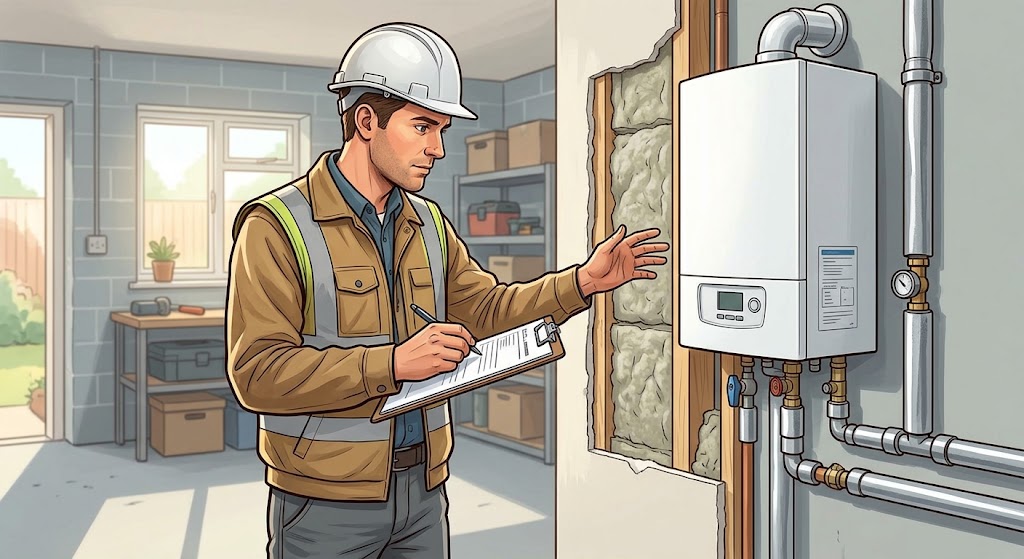
Acquiring an EPC is a straightforward process, but it must be conducted by an accredited professional.
1. Finding an Assessor: Homeowners and landlords must hire an accredited Domestic Energy Assessor (DEA). In the UK, you can easily find registered assessors via the official government EPC register website.
2. The Site Visit: The assessor will visit the property and conduct a non-intrusive visual inspection. This usually takes between 30 to 60 minutes, depending on the size of the home. They will measure the floor area, inspect the boiler, look at heating controls, check the loft insulation depth, photograph window glazing, and observe the construction type of the walls. They do not drill into walls or lift floorboards. Therefore, if you have unseen insulation (like underfloor insulation or filled cavity walls), you must provide documentary evidence to the assessor; otherwise, they will assume it does not exist.
3. Generating the Certificate: After the visit, the assessor inputs the collected data into the standardized RdSAP (Reduced Data Standard Assessment Procedure) software. The software calculates the rating and generates the certificate, which is then lodged on the central national register.
4. Costs: The cost of an EPC is not fixed by the government and varies depending on the property's size, location, and the specific assessor's fees. Generally, a domestic EPC costs between £60 and £120.
While many view the EPC as a box-ticking exercise required for property transactions, it possesses significant intrinsic value for occupants and owners.
· Financial Savings: The recommendations outlined in an EPC are a blueprint for reducing outgoings. In an era of volatile wholesale energy prices, implementing suggestions like switching to low-energy lighting, upgrading to a modern combi-boiler, or adding loft insulation can yield hundreds of pounds in annual savings. Over the ten-year lifespan of an EPC, these savings often vastly outweigh the initial capital outlay.
· Property Valuation and Marketability: Energy efficiency is increasingly priced into the UK housing market. Buyers are acutely aware of the cost of living and actively seek out homes that are cheaper to run. A high EPC rating (A-C) makes a property significantly more attractive, often commanding a 'green premium.' Conversely, properties with poor ratings are regularly subjected to lower offers.
· Access to Green Finance: The financial sector is reacting to the climate crisis by offering 'green mortgages.' These specialized financial products offer lower interest rates or cashback incentives for buyers purchasing highly energy-efficient homes or for homeowners remortgaging to fund green home improvements.
The Energy Performance Certificate is far more than a colorful chart attached to a property listing. It is a critical diagnostic tool that reveals the hidden running costs and environmental impact of our living spaces. As the UK continues its challenging transition toward a Net Zero economy, the regulatory framework surrounding energy efficiency will only become more rigorous. The MEES regulations have already set a baseline, but the inevitable trajectory is toward even stricter standards. For homeowners, landlords, and tenants alike, understanding and acting upon the insights provided by an EPC is no longer just a legal necessity—it is an essential strategy for financial prudence, asset protection, and environmental responsibility. Embracing the EPC is the first step toward building a warmer, cheaper, and greener future.