Officially called Stamp Duty Land Tax (SDLT), Stamp Duty is a tax you might have to pay if you buy a residential property or piece of land in England and Northern Ireland. While the concept of Stamp Duty can seem complex and overwhelming when making your very first property purchase, understanding the rules is crucial for budgeting. Scotland and Wales operate under completely different taxation systems for property purchases. Fortunately, the UK government provides various rules and exemptions specifically designed to help first-time buyers get onto the property ladder. This comprehensive guide, crafted for both UK residents and overseas buyers looking to enter the UK property market, will explain exactly how Stamp Duty applies to your unique situation in 2026, what regulations you need to be aware of, and how you can proactively prepare for your property journey.
A common misconception among new purchasers is that all first-time buyers are entirely exempt from Stamp Duty. The reality is that you will only need to pay Stamp Duty if the overall value of the property you are purchasing is above a certain monetary threshold. This threshold differs significantly based on where you live in the UK, the current government legislation in effect, and when exactly you complete your property purchase. For first-time buyers purchasing properties in England and Northern Ireland, the threshold for paying Stamp Duty is generally much higher than for those who have bought property before, thanks to the government’s dedicated first-time buyer relief scheme. Under the current 2026 rules, standard Stamp Duty rates will begin to apply if the property you intend to buy is worth more than £500,000. If the property value sits below this cap, substantial tax relief applies.
The UK property taxation landscape experienced significant shifts following the April 2025 changes, establishing the permanent rules we operate under today in 2026. Ultimately, this means that buyers now pay more Stamp Duty than they did under the older, more generous temporary relief schemes. These established rules apply to both standard Stamp Duty rates and the specific relief rates designed for first-time buyers. For non-first-time buyers, the 0% Stamp Duty threshold sits firmly at £125,000. Crucially for those reading this guide, the 0% Stamp Duty threshold for first-time buyers is capped at £300,000. Additionally, standard Stamp Duty charges now apply in full to any properties worth more than £500,000, entirely removing the previous £625,000 home value limit. Furthermore, any additional property purchases (such as second homes or buy-to-lets) now incur a steeper 5% surcharge, which was increased from 3% in late 2024. First-time buyers must ensure they calculate their purchase budgets based on these official 2026 thresholds to avoid any unexpected financial shortfalls before exchanging contracts.
To understand exactly what you might owe to HM Revenue and Customs (HMRC), you must look at the specific 2026 tax bands. For first-time buyers purchasing residential real estate in England and Northern Ireland, the tax is applied in progressive slices, similar to income tax. The current 2026 rates are structured as follows:
• £0 to £300,000: You will pay a 0% Stamp Duty rate.
• £300,001 to £500,000: You will pay a 5% Stamp Duty rate on this specific portion.
For properties purchased above the £500,000 mark, the first-time buyer discount will absolutely not apply. Instead, you will pay the standard, non-discounted Stamp Duty rates across the entire purchase price (starting from the standard £125,000 threshold). Remember, you only pay the tax on the specific amount that falls above the given threshold. For example, if you were to buy a starter home for £304,000 as a qualifying first-time buyer, you would only pay a 5% tax on the £4,000 that falls strictly above the £300,000 zero-tax threshold, resulting in a highly manageable £200 total tax bill.
Depending on the exact geographical location where you intend to purchase property in the UK, you may be more or less likely to face a Stamp Duty bill. The regional property price disparities across the UK play a massive role in determining your tax liability. As you navigate the market and verify UK-based property listings, keeping track of regional averages is essential. For context, in mid-2026, many starter homes outside major cities still fall comfortably beneath the £300,000 mark, meaning these buyers will not pay any Stamp Duty whatsoever. However, the UK property market is highly localized. In London, for instance, the average house is routinely valued well above £500,000. If you are buying an average home in the capital, you will completely lose the first-time buyer relief and will be subject to standard taxation rates. In regions like England's South East, the South West, and the East of England, average house prices often sit between £300,001 and £500,000, meaning buyers here will likely face a 5% Stamp Duty charge on a portion of their initial purchase.
It is vital to remember that Stamp Duty Land Tax (SDLT) as discussed in this guide only applies directly to property purchases made in England and Northern Ireland. The devolved nations have their own distinct property tax systems. First-time buyers in Scotland pay no property tax (which is officially known locally as the Land and Buildings Transaction Tax, or LBTT) on property purchases valued up to £175,000. Notably, Scotland's Additional Dwelling Supplement (ADS) for second homes is currently set at 8%, the highest in the UK. In Wales, the system operates slightly differently; while there is no specific equivalent first-time buyer relief scheme, no purchaser will pay property tax (known as Land Transaction Tax, or LTT) on residential property purchases up to £225,000.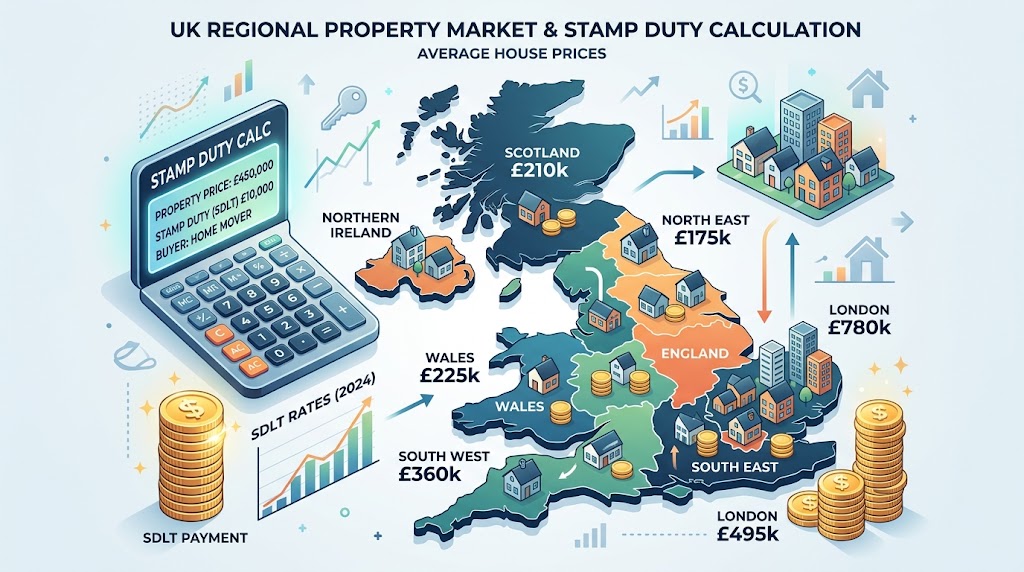
The term 'first-time buyer' might seem completely self-explanatory on the surface, but the legal definition rigorously applied by HM Revenue and Customs (HMRC) is incredibly strict. You will need to meet stringent criteria to qualify for these Stamp Duty discounts. Tax relief is exclusively available if you meet all of the following conditions:
• The home you are purchasing will be your only or main residence.
• You have never previously owned a freehold residential property anywhere in the world.
• You do not currently possess an existing leasehold interest in a residential property.
• You have never owned a foreign property or inherited one.
This last point is incredibly critical for overseas buyers reading this guide: if you have ever owned a home in your home country, you do not legally qualify as a first-time buyer in the UK. Consequently, you will be entirely subject to standard rates, and potentially an additional non-resident surcharge.
Buying a home jointly with another person, such as a romantic partner, a spouse, or a trusted friend, can be an incredibly effective way to get on the property ladder and substantially combine your financial borrowing power. However, it is essential to note that to legally benefit from the Stamp Duty relief scheme, absolutely everyone included in the mortgage application and named on the property deeds needs to be officially classed as a first-time buyer. If you are purchasing your very first home but the person you are buying it with has previously owned a property (even if they have long since sold it or only held a partial share), standard Stamp Duty rates will automatically apply to the entire purchase transaction.

This section is especially critical for overseas buyers and expatriates looking to purchase their first residential property in the UK. Things operate significantly differently for first-time buyers regarding Stamp Duty if you are not legally classed as a UK resident for tax purposes. To be considered a UK resident for Stamp Duty applications, you need to have been physically present in the UK for at least 183 days (roughly six months) in any continuous 365-day period falling within the 12 months leading up to your purchase, or the 12 months immediately after.
If you do not meet this specific residency criteria, you will face a blanket 2% surcharge on top of your normal Stamp Duty rate. Crucially, this extra surcharge applies regardless of whether you are a first-time buyer or not. For overseas first-time buyers purchasing a home valued under £300,000 in 2026, your base tax rate might technically be 0%, but the 2% non-resident surcharge still applies in full. This means you will effectively pay 2% on the first £300,000. If buying a property priced between £300,001 and £500,000, the blended rate becomes 7% (the 5% FTB rate plus the 2% surcharge) for that specific portion. Understanding this unavoidable surcharge is vital for international buyers accurately planning their investment capital and mortgage deposits.
As the descriptive name suggests, mixed-use properties are buildings or plots that are not strictly 100% residential or strictly non-residential. Common examples of this could be a residential flat situated directly above a retail shop, an apartment physically joined to a local GP's surgery, or a residential home with a working commercial farm attached. Entirely different Stamp Duty rules and rates apply to this specific property category. As a direct legislative result, first-time buyers cannot qualify for their usual residential relief scheme when purchasing mixed-use properties. For the freehold sales of mixed-use properties, the Stamp Duty rates are currently set at 0% for properties up to £150,000, 2% for properties priced between £150,001 and £250,000, and a flat 5% for anything above the £250,000 mark. First-time buyers should carefully consider the heavier tax implications if they are looking at acquiring these unconventional property types as their primary residence.
Even if the final purchase price of your new home means you do not legally need to pay any actual Stamp Duty funds at all, you will still be legally required to file a formal Stamp Duty return document to HMRC. Fortunately, this bureaucratic administrative step is normally handled seamlessly by the professional solicitor or licensed conveyancer who is helping you manage the complex legal side of the real estate purchase. If you do indeed owe tax, first-time buyers must make a Stamp Duty payment just like anyone else in the market.
The standard operational process involves sending a cleared payment directly to HM Revenue and Customs (HMRC) within a strict window of 14 days following your official completion date. Your solicitor will utilize a unique 11-character transaction reference number assigned specifically to your case to ensure the funds are allocated correctly. Payment methods are relatively flexible and routinely include online banking, direct CHAPS bank transfers, and standard cheques. Be highly aware that you could face swift financial penalties if your Stamp Duty paperwork is filed late: £100 if filed up to three months late, and a heavier £200 fine if more than three months late.
Yes. If you have previously purchased, owned, or even inherited a residential property anywhere in the entire world, you absolutely do not count as a first-time buyer under UK law. This strict definition means you will not be eligible for the generous Stamp Duty exemption, no matter the specific purchase price of the new property. In 2026, standard taxation heavily begins on properties worth more than just £125,000. In practical terms, most people who have owned a property before will inevitably pay Stamp Duty. Furthermore, if you are planning to deliberately keep hold of an existing property while buying another, you will almost certainly be subject to the additional 5% second home surcharge, which was increased from 3% in late 2024.
On a £400,000 house, under the strict Stamp Duty rates applicable in 2026 in England and Northern Ireland, you will pay exactly:
• £5,000 if you are a verified first-time buyer (calculated as 0% on the first £300,000, and 5% on the remaining £100,000 slice).
• £10,000 if you are not a first-time buyer (calculated as 0% on the first £125,000, 2% on the next £125,000 which equals £2,500, plus 5% on the final £150,000 slice which equals £7,500).
• If you are an overseas first-time buyer lacking UK residency, you will pay the £5,000 standard FTB rate plus a mandatory 2% non-resident surcharge applied to the entire £400,000 (£8,000), totalling a hefty £13,000.
To accurately calculate your upcoming Stamp Duty liability, you must first precisely identify the tax brackets that apply to your specific demographic and purchasing situation. Then, work out the appropriate percentage for each distinct slice of your home's total final value. Below the initial starting threshold, you pay absolutely zero tax. As the property price naturally enters higher progressive brackets, you only ever pay the specified percentage on the portion of the price falling strictly within that particular bracket, not on the entire sum. Always double-check your manual calculations using official online HMRC calculators to ensure precision.
Navigating the complexities of the property market for the very first time is a momentous and often stressful occasion, whether you are a UK resident looking to settle down in a familiar neighborhood or an ambitious overseas buyer looking to expand your international investment horizons. While the introduction of mandatory property taxes like Stamp Duty Land Tax (SDLT) can unfortunately add a noticeable layer of complexity and extra capital cost to your overall purchase budget, being thoroughly well-informed is your absolute best defense against unexpected financial surprises. The established 2026 rates firmly signify a permanent tightening of the available relief thresholds compared to previous years, forcefully emphasizing the urgent need for meticulous, highly detailed financial planning before signing any contracts. By deeply understanding your true eligibility, carefully calculating the specific regional rates based on your prospective property’s value and your exact residency status, and ensuring perfectly timely payments through your appointed solicitor, you can seamlessly streamline the administrative process. Remember, the right preparation and effectively leveraging the seasoned expertise of trusted legal professionals and mortgage advisors will quickly turn the daunting task of buying your very first property into a manageable, highly rewarding, and ultimately exciting life journey.