Buying a new-build property is widely considered one of the most exciting financial and personal milestones in a person’s life. It offers the promise of modern living, superior energy efficiency, and a pristine, untouched environment that requires no immediate renovations. For many new-build buyers, the appeal lies in the idea of a 'blank canvas'—a home where they are the very first occupants, equipped with brand-new appliances, modern insulation, and contemporary design features. However, the journey from reserving a plot on a building site to finally holding the keys has not always been a seamless or stress-free process for every purchaser in the housing market.
Historically, the United Kingdom’s housebuilding industry has faced considerable scrutiny and criticism regarding the inconsistent quality of new homes and the varied standards of customer service provided by developers. While many builders consistently deliver excellent properties and robust aftercare, a significant minority of buyers have found themselves entangled in stressful situations. From discovering cosmetic 'snags' like poor paintwork and ill-fitting doors to encountering major structural defects, the lack of a standardized regulatory framework left many consumers feeling powerless. Additionally, aggressive sales tactics, unclear management fees, and inadequate responses to complaints further eroded trust in the new-build sector.
Recognizing the urgent need for reform, industry leaders, consumer advocates, and government stakeholders came together to create a unified, robust solution. The goal was to bridge the gap in consumer protection and ensure that the multi-billion-pound housebuilding sector operates with the transparency, fairness, and accountability that modern consumers expect. This collaborative effort led to the inception of a transformative regulatory body designed specifically to champion the rights of the new-build homebuyer: the New Homes Quality Board (NHQB).
The New Homes Quality Board (NHQB) is an independent, non-profit organization established to drive up the quality of new-build homes and vastly improve the consumer protections available to buyers across the UK. Launched in response to the growing demand for better industry standards and independent oversight, the NHQB serves as the ultimate guardian of new-build buyers' rights.
Comprising representatives from various sectors, including consumer groups, mortgage lenders, warranty providers, and the development industry itself, the NHQB operates with a balanced, objective mandate. Its primary mission is twofold: first, to establish a rigorous, overarching code of practice that all registered developers must strictly adhere to; and second, to provide an independent avenue for redress when things go wrong, ensuring that buyers are never left to fight well-resourced property developers on their own.
Before the NHQB was formed, the new-build sector was governed by a patchwork quilt of different codes and charters, such as the Consumer Code for Home Builders. While these previous codes offered some level of protection, they were often fragmented, confusing for the average buyer to navigate, and sometimes lacked the necessary regulatory 'teeth' to effectively enforce compliance or penalize poor developer behavior. The NHQB was designed to consolidate these various guidelines into a single, highly robust, and legally sound framework that applies universally to registered developers.
By mandating that developers register with the board, the NHQB effectively acts as a quality assurance stamp. When new-build buyers see that their chosen developer is registered with the NHQB, they can proceed with confidence, knowing that the company is legally and ethically bound to treat them fairly, construct their home to a high standard, and address any post-completion issues promptly and professionally. This foundational shift is fundamentally changing the power dynamics of the UK housing market, giving consumers a much stronger voice.
At the very heart of the NHQB’s regulatory power is the New Homes Quality Code (NHQC). This comprehensive document is not merely a set of gentle suggestions; it is a strict, mandatory code of practice that outlines exactly how developers must behave from the initial marketing of a property through to the end of a two-year aftercare period. Developers who sign up to the NHQB must agree to abide by every single provision within this Code.
The Code is built upon a foundation of fundamental principles designed to protect the consumer at every touchpoint. These principles include Fairness, Safety, Quality, Transparency, Independence, and Responsiveness. Under the 'Fairness' principle, developers must treat buyers fairly and not take advantage of them at any stage of the buying process. The 'Safety' and 'Quality' principles mandate that the home must be built to the agreed standards and specifications, meeting all relevant building regulations and safety laws without compromise.
Transparency is perhaps one of the most critical elements of the NHQC. For decades, buyers have complained about hidden costs, such as escalating estate management fees or complex leasehold structures, which were not clearly explained during the sales pitch. The Code forces developers to be completely upfront about all costs, timelines, and the precise nature of the tenure. Buyers must be provided with all the necessary information in plain English, allowing them to make fully informed financial decisions before parting with any money.
To ensure these principles are ingrained in the industry's culture, developers are required to undergo rigorous training and adapt their internal processes to align with the NHQC. This means retraining sales staff to avoid high-pressure tactics, improving site management to ensure better build quality, and overhauling customer service departments to respond to complaints within strict, mandated timeframes. The Code effectively sets a new, elevated baseline for what is considered acceptable behavior in the housing industry.

One of the most vulnerable times for any new-build buyer is the initial sales process. The excitement of walking through a beautifully staged show home can easily cloud judgment, and historically, some developers exploited this enthusiasm using high-pressure sales tactics. The NHQB strictly prohibits such behavior. Under the new rules, sales representatives are forbidden from rushing buyers into making hasty decisions or pushing them to use specific, developer-affiliated solicitors or mortgage brokers—a practice that previously created severe conflicts of interest.
The Code also introduces strict rules around 'Early Bird' schemes and reservation fees. Previously, buyers who paid a fee to reserve a plot often struggled to get their money back if their circumstances changed or if they simply changed their minds after reviewing the legal documents. The NHQC dictates clear cooling-off periods and mandates that reservation fees must be fully refundable within a specific timeframe, ensuring buyers are not financially penalized for exercising caution.
The requirement for absolute transparency is especially critical when purchasing an off-plan property. Buying a home that has not yet been built means buyers cannot physically inspect the property; instead, they are heavily reliant on architectural plans, brochures, computer-generated images, and the developer's promises. The NHQB requires developers to provide clear, incredibly accurate information about the property's layout, dimensions, fixtures, and fittings. If there are any necessary changes to the design or specifications during the construction phase, the developer must inform the buyer immediately and, depending on the severity of the change, allow the buyer to cancel the contract and receive a full refund without penalty.
Furthermore, developers must provide a realistic and reliable timeline for completion. 'Long stop' dates—the absolute latest date by which the home must be finished—must be clearly defined in the contract. If the developer fails to complete the home by this agreed-upon date, the buyer is granted the legal right to walk away from the purchase and recover all their deposits and fees, providing a vital safety net against unending construction delays.
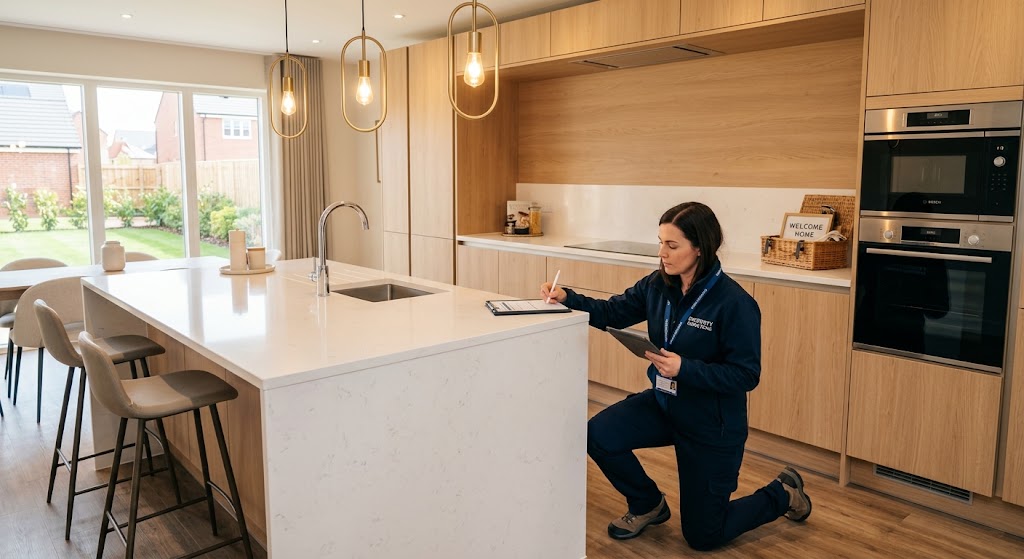
Perhaps the most celebrated and practical consumer protection introduced by the NHQB is the right to a pre-completion inspection. For many years, a major point of contention in the new-build sector was that buyers were often legally barred from independently inspecting their new home until after legal completion had taken place—meaning they had already handed over hundreds of thousands of pounds and legally owned the property before discovering any faults.
This archaic rule left buyers moving into homes with myriad 'snags'—ranging from minor aesthetic issues like scratched kitchen worktops and poorly applied sealant, to more severe problems like badly installed plumbing or uneven flooring. Buyers then had to live in a virtual construction zone while contractors came back to fix issues over several weeks or months, completely ruining the experience of moving into a brand-new home.
The NHQB has fundamentally flipped this dynamic. The New Homes Quality Code grants buyers the absolute right to employ a suitably qualified, independent professional to conduct a comprehensive 'snagging' survey of the property before legal completion takes place. This inspection typically occurs within a specific window, usually around five days after the developer issues the notice to complete.
This proactive approach forces developers to ensure the property is genuinely finished and meets quality standards before handing over the keys. Any defects identified during this independent inspection must be addressed and rectified by the developer. This singular change has dramatically reduced the stress associated with the handover process, ensuring that new-build buyers can finally experience the joy of moving into a pristine, fully finished home from day one.
The protection afforded by the NHQB does not end the moment the keys are handed over. Moving into a new home is just the beginning, and as the property 'settles,' issues can sometimes arise. Recognizing this, the NHQC mandates a stringent two-year aftercare period. During this time, developers are legally obligated to provide a robust after-sales service, dealing with any emerging issues, snags, or defects promptly, efficiently, and courteously.
Developers must have clear, accessible systems in place for buyers to report problems, and they must adhere to strict timelines for acknowledging and resolving these issues. No longer can developers ignore phone calls or delay repairs indefinitely. But what happens if a developer fails to meet these obligations? This is where the NHQB framework deploys its most powerful tool: the New Homes Ombudsman Service (NHOS).
The New Homes Ombudsman Service acts as the enforcement arm of the NHQB framework. It provides a free, completely independent, and impartial dispute resolution service for new-build buyers who have exhausted their developer's internal complaints procedure. Before the NHOS, buyers who reached a deadlock with a developer often had no choice but to pursue expensive, time-consuming, and stressful legal action through the courts—a route most simply could not afford.
Now, if a developer fails to resolve a complaint regarding a breach of the NHQC, the buyer can escalate the matter directly to the Ombudsman. The NHOS has the authority to thoroughly investigate the complaint, demand evidence from both parties, and make a binding ruling. If the Ombudsman finds in favor of the consumer, they possess wide-ranging powers to compel the developer to take action. This can include ordering the developer to apologize, forcing them to carry out specific repairs or remedial work, or even mandating that they pay financial compensation to the buyer for the distress, inconvenience, or financial loss suffered. The existence of the NHOS ensures that the NHQC is not just a theoretical set of rules, but a heavily enforced standard with real consequences for non-compliance.
In conclusion, the establishment of the New Homes Quality Board and the introduction of the New Homes Quality Code represent a watershed moment for the UK housebuilding industry. For too long, the balance of power heavily favored the developer, leaving individual buyers vulnerable to poor quality, lack of transparency, and inadequate customer service. The NHQB has systematically dismantled these historical inequalities, replacing them with a fair, transparent, and highly accountable framework.
From banning aggressive sales tactics and ensuring complete transparency regarding costs, to granting the crucial right of independent pre-completion inspections and establishing the formidable New Homes Ombudsman Service, the NHQB protects new-build buyers at every single stage of their journey. By providing these robust safety nets, the NHQB not only safeguards the financial and emotional investments of individual homebuyers but also drives up standards across the entire construction industry. Ultimately, the New Homes Quality Board brings much-needed confidence back to the housing market, ensuring that the dream of owning a brand-new home remains a joyful and secure reality for future generations.